Background
Curiositech is a Portland-based product studio founded by Erich Owens, whose background spans twelve years of production ML, computer vision, and VR/AR at Meta, FAIR, Oculus, and Instagram.

Experience
Purpose-driven applications across recovery, legal aid, AI, and developer tools.
Drone perception and autonomous flight systems.
Twelve years across Facebook Core, FAIR, Oculus, Reality Labs, and Instagram. IC to managing 80+ engineers, researchers, and artists.
CV and LLM integration for photo understanding. Shipped AI editing features across Facebook mobile.
Led 40+ engineers across avatar customization, asset pipeline, and ML integration. Text-to-avatar generation with GPT-3 and CLIP (hackathon winner).
Mobile AR face tracker with FACS expression tracking. Audio-based lipsync. Shipped face tracking to Instagram AR effects.
Effect curation and personalized ranking. Hired art curators. Surfacing avant-garde Spark effects.
Managed AI engineers on embodied agents and MRI compressed sensing. fastMRI dataset release with NYU Langone. AlphaZero open-source.
Built avatar-from-photo in 2 months for Facebook Spaces. Hired ex-Pixar talent. FastCompany-reviewed avatars.
Built VR simulations for designers pre-hand-controller launch. Used VR to design VR.
LIDAR room scanning for social VR. Thermal haptic VR controller with peltier cooling (hackathon winner).
Overhauled comment quality and civility systems. Thompson sampling. Built 'Commentology' tool used company-wide for a decade.
Public content quality and ranking. First CV signals in feed. Tracked memes across Facebook and Instagram (hackathon winner). Built category-based content filters including 'hide baby photos' (hackathon winner).
News discovery startup. Acquired by LinkedIn 2014.
AI business intelligence and strategic analytics.
Domains
Education
Connect
Patents
15 filings · 2016 – 2022Fifteen patent filings spanning ranking systems, content understanding, content moderation, viral propagation analysis, and haptic feedback for virtual reality — all shipped to production at Facebook and Oculus.
Ranking, demotion, and quality classification systems for Facebook News Feed — determining what billions of users see, in what order, and how content quality and temporal relevance shape the experience.
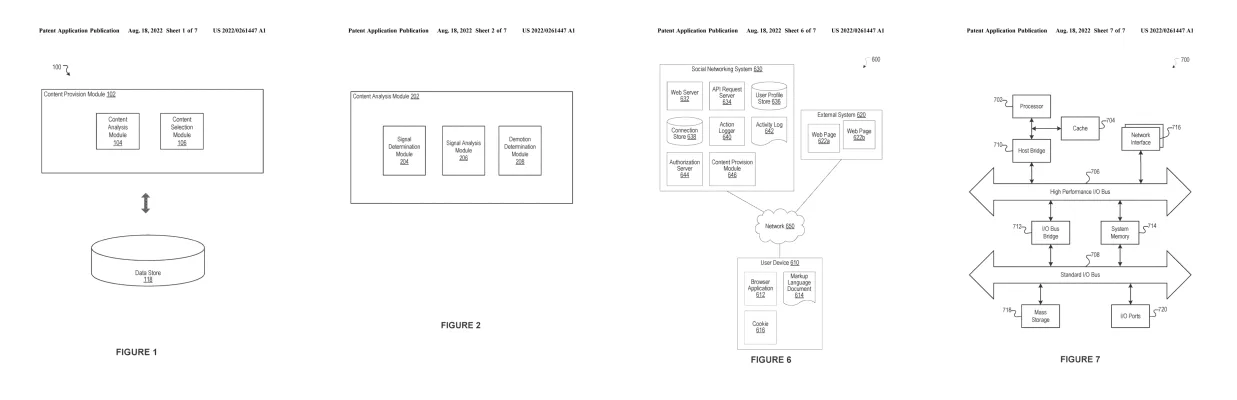
Systems and Methods for Demotion of Content Items in a Feed
Signal-based demotion system that detects objectionable material in feed content and reduces its distribution score accordingly.
Filed Aug 2022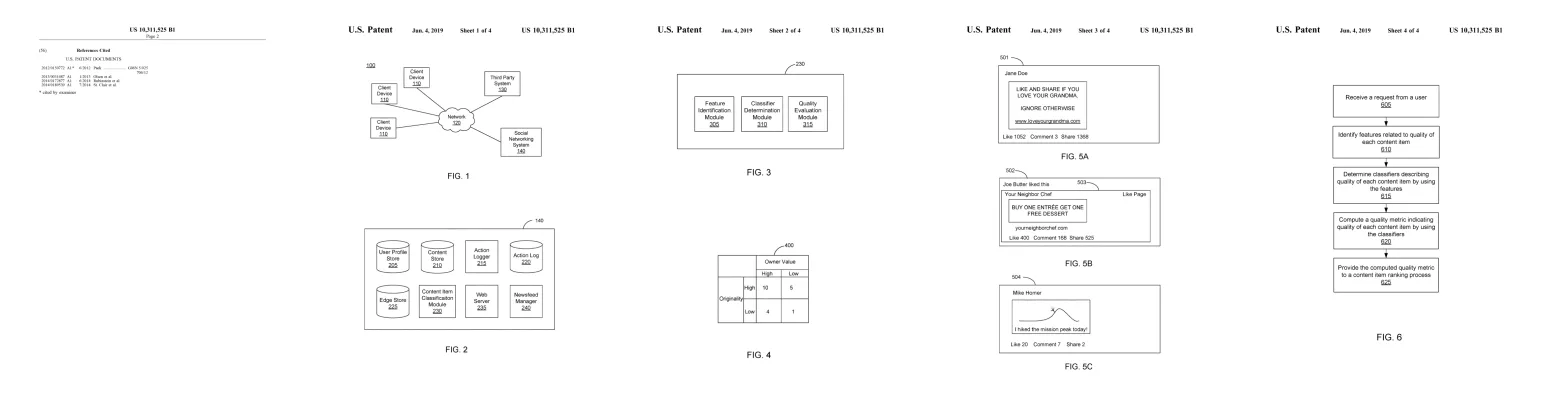
Content Quality Evaluation and Classification
Classifies content items by quality signals to prioritize high-quality posts and suppress low-quality or clickbait content.
Filed Jun 2019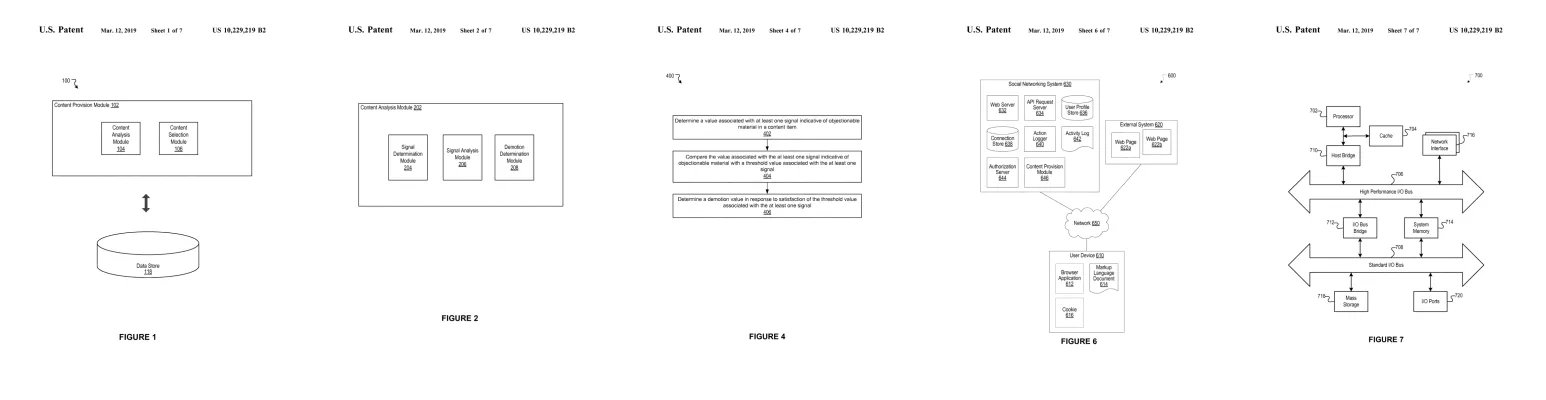
Systems and Methods for Demotion of Content Items in a Feed
Multi-signal framework for computing demotion weights on feed content based on user reports, content analysis, and behavioral patterns.
Filed Mar 2019
Viral Content Propagation Analyzer in a Social Networking System
Detects and analyzes virally propagating subject matter by processing user activity through a relevance engine to identify trending content in real time.
Filed Dec 2018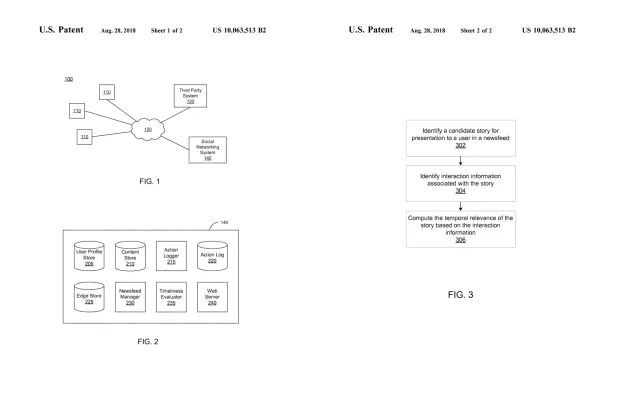
Determining Temporal Relevance of Newsfeed Stories
Time-decay ranking model that adjusts story relevance based on age, interaction velocity, and freshness signals.
Filed Aug 2018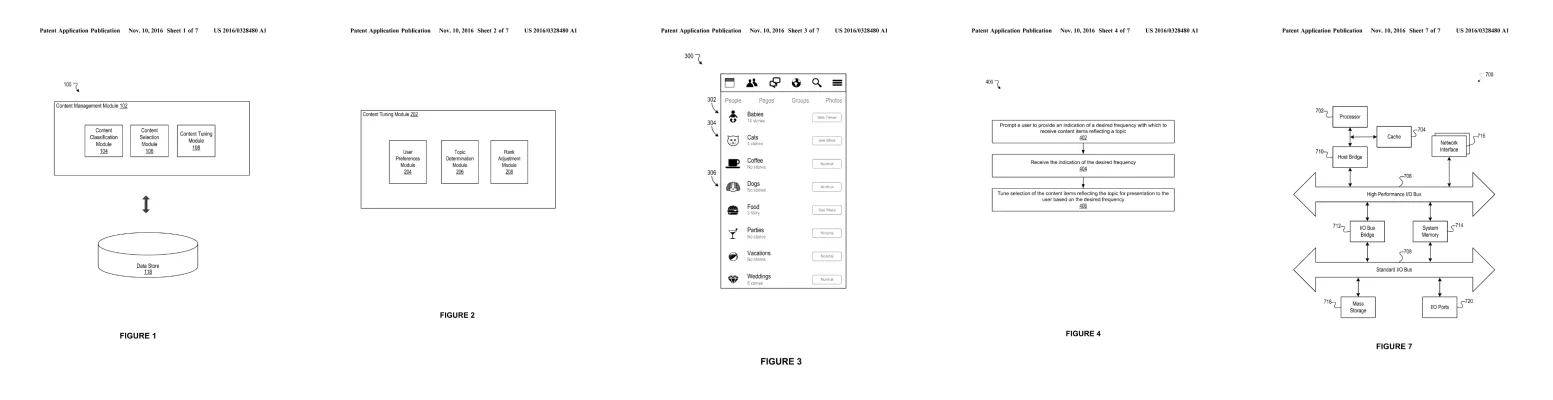
Systems and Methods for Tuning Content Provision Based on User Preference
Prompts users for topic frequency preferences and adjusts feed ranking weights to match desired content mix.
Filed Nov 2016Multi-signal comment ranking systems that balance impression-based metrics, audience context, author credibility, and interaction ratios to surface the most relevant comments on Facebook posts.

Systems and Methods for Ranking Comments
Trains a relatedness model across terms to compute relevance ratings between a comment and its parent post for ranking.
Filed Apr 2020
Ranking and Filtering Comments Based on Audience
Audience-aware comment ranking that adjusts visibility based on the viewer's relationship to the commenter and post author.
Filed Jan 2020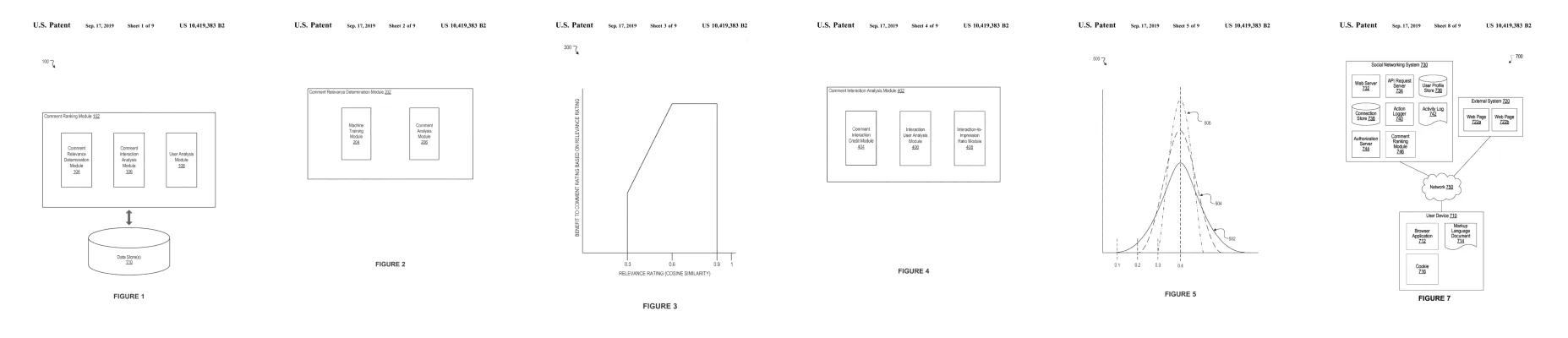
Systems and Methods for Ranking Comments Based on Interaction-to-Impression Ratio
Ranks comments by their interaction-to-impression ratio — surfacing comments that earn engagement relative to how often they are shown.
Filed Sep 2019
Ranking and Filtering Comments Based on Author and Content
Multi-signal scoring that weighs author credibility, content quality, and contextual relevance to rank comments on posts.
Filed Feb 2019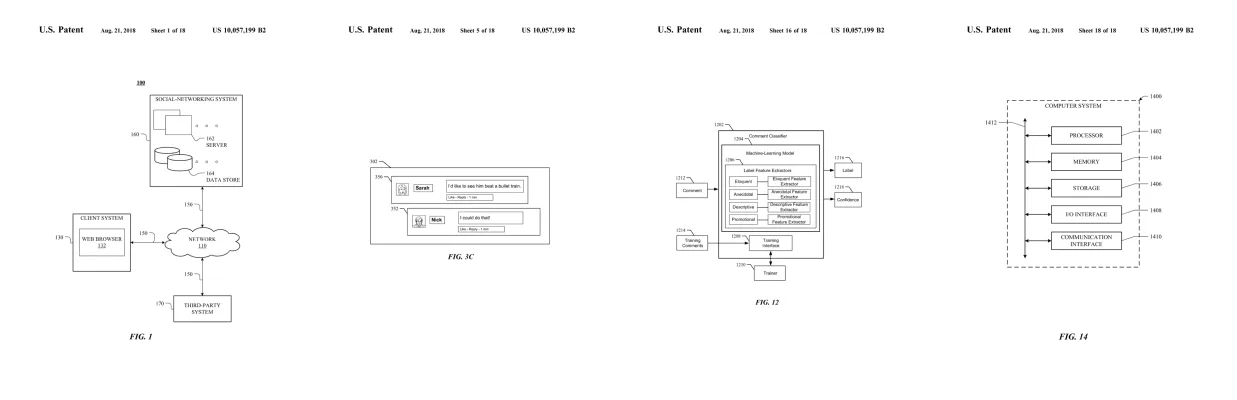
Ranking and Filtering Comments Based on Impression Calculations
Impression-normalized ranking that computes comment scores adjusted for exposure, preventing position bias in engagement metrics.
Filed Aug 2018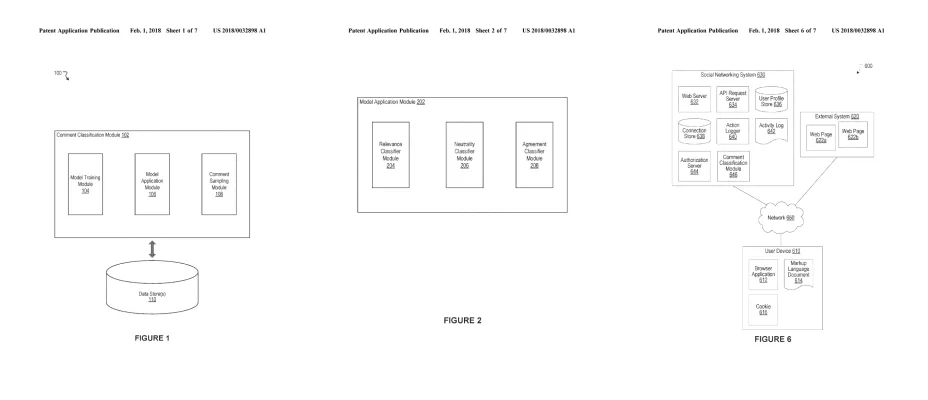
Systems and Methods for Comment Sampling
Statistical sampling framework for selecting representative comment subsets on high-volume posts while preserving diversity.
Filed Feb 2018Virtual reality haptic feedback systems and avatar auto-generation using face cluster analysis — mapping user faces to pre-created VR avatars for Oculus social experiences.

Systems and Methods for Generating Content
Clusters user faces by feature similarity and maps them to pre-created VR avatars, enabling automatic avatar generation for Oculus social experiences.
Filed Apr 2020
Providing Temperature Sensation to a User Based on Content Presented to the User
Haptic feedback system that delivers temperature sensations synchronized with VR content — warmth near virtual fire, cold in snow scenes.
Filed May 2019
Providing Temperature Sensation to a User Based on Content Presented to the User
European filing of the temperature haptics system for VR headsets and controllers.
Filed Feb 2019Get in touch
Questions about our products or partnership inquiries welcome.
Contact Us